ClampsGaskets
Accurate design & proper
materials: For a strong, leak-tight connection
Often overlooked and neglected...
- ...but few knows that clamps and gaskets are often the root cause of premature failures in the system.
- Clamps of poor quality will fail to provide a strong, even pressure around the pipe joints.This lead not only to leakage and noise, but also the risk of fake air in the system, disturbingthe functionality of emission technology.
- ECO clamps and gaskets are produced to precise tolerances and clearly marked withrecommended torque specifications. Our gaskets are designed to handle materialvariations and temperature fluctuations, providing a leaktight connection for years.
Technical Insights: What's the difference between ID/OD and V-clamps?
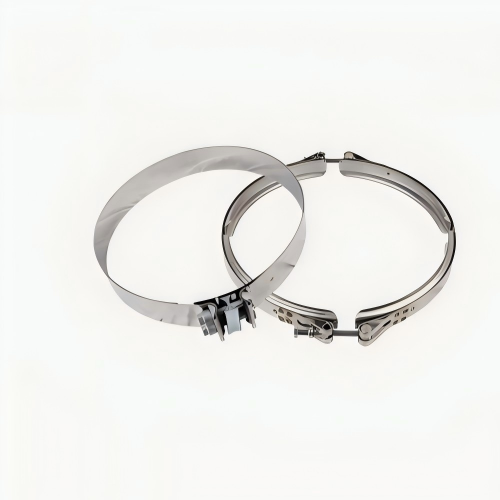
ID/OD clamp connections: For pre-Euro III
Before the more strict emission standards, leakage requirements were minimal as emissions were already compliant from the engine, so clamping solutions were simple: One end expanded and slitted (ID-end), the other left untouched (OD-end). The clamp’s only function was to "squeeze" the ID-end around the OD-end, creating a strong but often non-dismantlable connection.
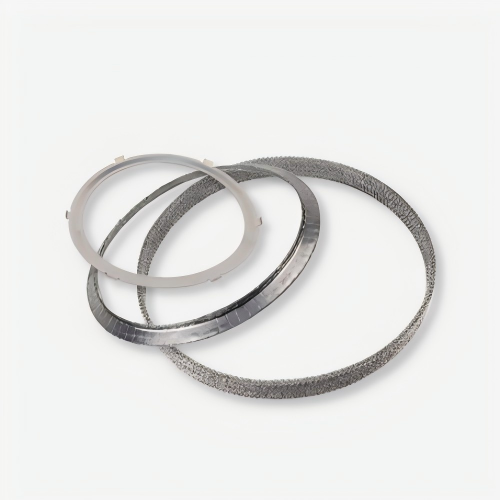
V-Clamps: Preferred for Euro IV - VI
With the introduction of Euro IV, V and VI, preventing leakage before the exhaustgas reaches catalysts and filters became a topic. The most common solution is theV-clamp. One end is designed with a flare, the other with a bulge. Each with asealing surface matching the counter-part. With a gasket in between, the V-clamppushes the flare and the bulge towards each other as it is tightened, with no mechanical damage following
READ MORE
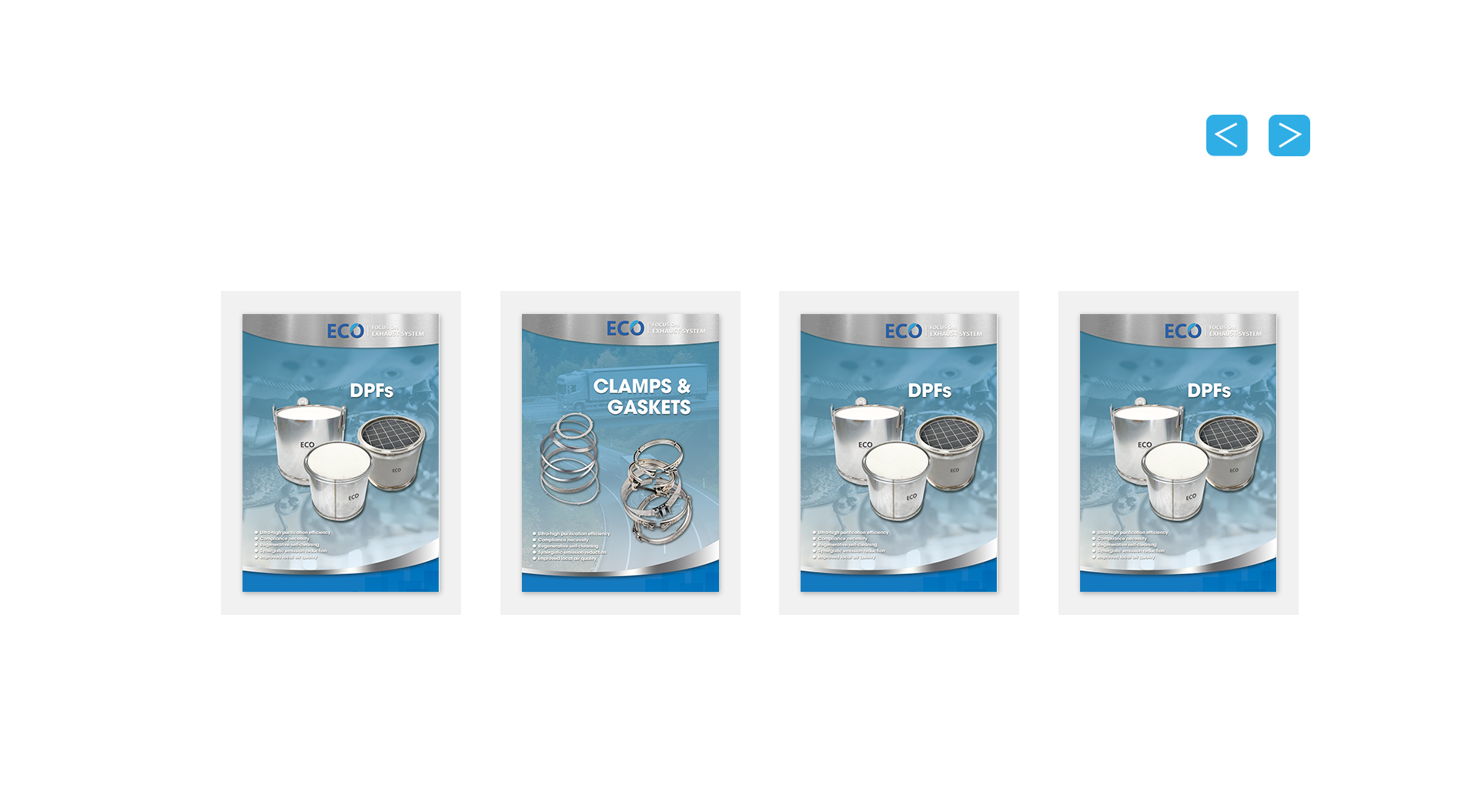
YOU CAN LEARN ABOUT THE SPECIFIC PRODUCT CATEGORIES OF CLAMPS AND WASHERS BYREFERRING TO THE PRODUCT BROCHURE BELOW, AND VIEW THE COMPLETE PRODUCT RANGE.