
European vs North American Heavy-Duty DPF Fitment: What Buyers Must Verify
A practical comparison of identifiers, connection layouts and procurement checks for cross-market DPF sourcing.
By the ECO Technical Content Team. This guide was prepared from ECO application tables, OE-reference data and the official technical sources cited at the end. It is written for distributors, fleet maintenance teams and parts specialists. Product selection must still be confirmed against the vehicle serial number, engine/aftertreatment configuration, dimensions and current OE service information.
Why this subject matters
European and North American catalogs often describe the same function with different application logic. European records commonly lead with vehicle maker, model family and Euro emissions generation; North American records often lead with engine make, OE service number and an assembly family. Moving a number from one market into the other without preserving that context creates false matches even when the canisters appear similar.
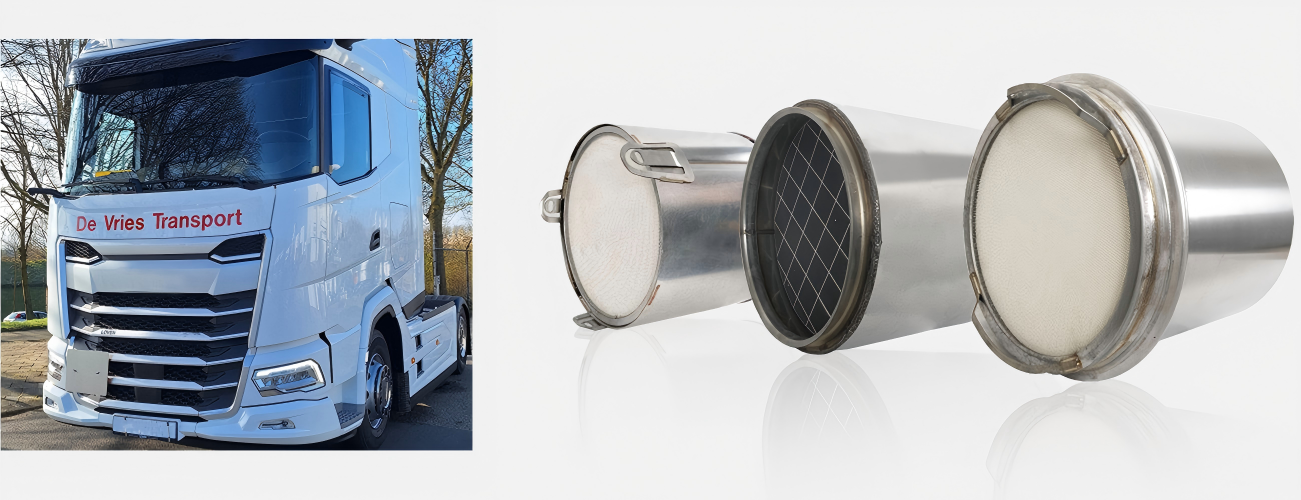
A diesel particulate filter is not an isolated canister. It sits in a thermally active system that includes inlet and outlet cones, sensing ports, dosing hardware, brackets, clamps, gaskets and control logic. The US EPA explains that a DPF traps particulate matter and periodically regenerates; the service implications include backpressure monitoring and ash cleaning whose timing depends on device design and duty cycle. Consequently, a correct catalog match has to preserve both filtration function and mechanical sealing.
How catalog logic differs
In ECO’s European list, records connect a Dinex reference with an OE reference, vehicle manufacturer and a truck or bus model. Examples include DAF LF/XF/CF, Iveco Stralis/Trakker/Eurocargo, MAN TGL/TGM/TGS/TGX, Mercedes Atego/Actros, Scania L/P/G/R/S and Volvo FH/FM. The model and emission-generation context is central.
The North American list is organized more heavily around engine make and OE-number families. Detroit Diesel, Cummins, Caterpillar, Hino, Isuzu, Volvo/Mack and International/Navistar applications can carry long sets of new, remanufactured and superseded numbers. Those number families are useful, but they do not remove the need to confirm the vehicle and the physical assembly.
Six differences that change the order
A repeatable verification workflow
- Capture the source record. Record the full OE number exactly as shown, including prefixes, suffixes, spaces and remanufactured designators. Photograph the product label and both connections.
- Confirm the application. Identify vehicle make, model, model year, engine family, emission level and market. A truck badge alone is not enough because aftertreatment layouts can change during a production run.
- Compare the physical interface. Check body length and diameter, inlet/outlet diameters, clocking, sensor and pressure-port locations, bracket position, flow direction, gasket profile and clamp type.
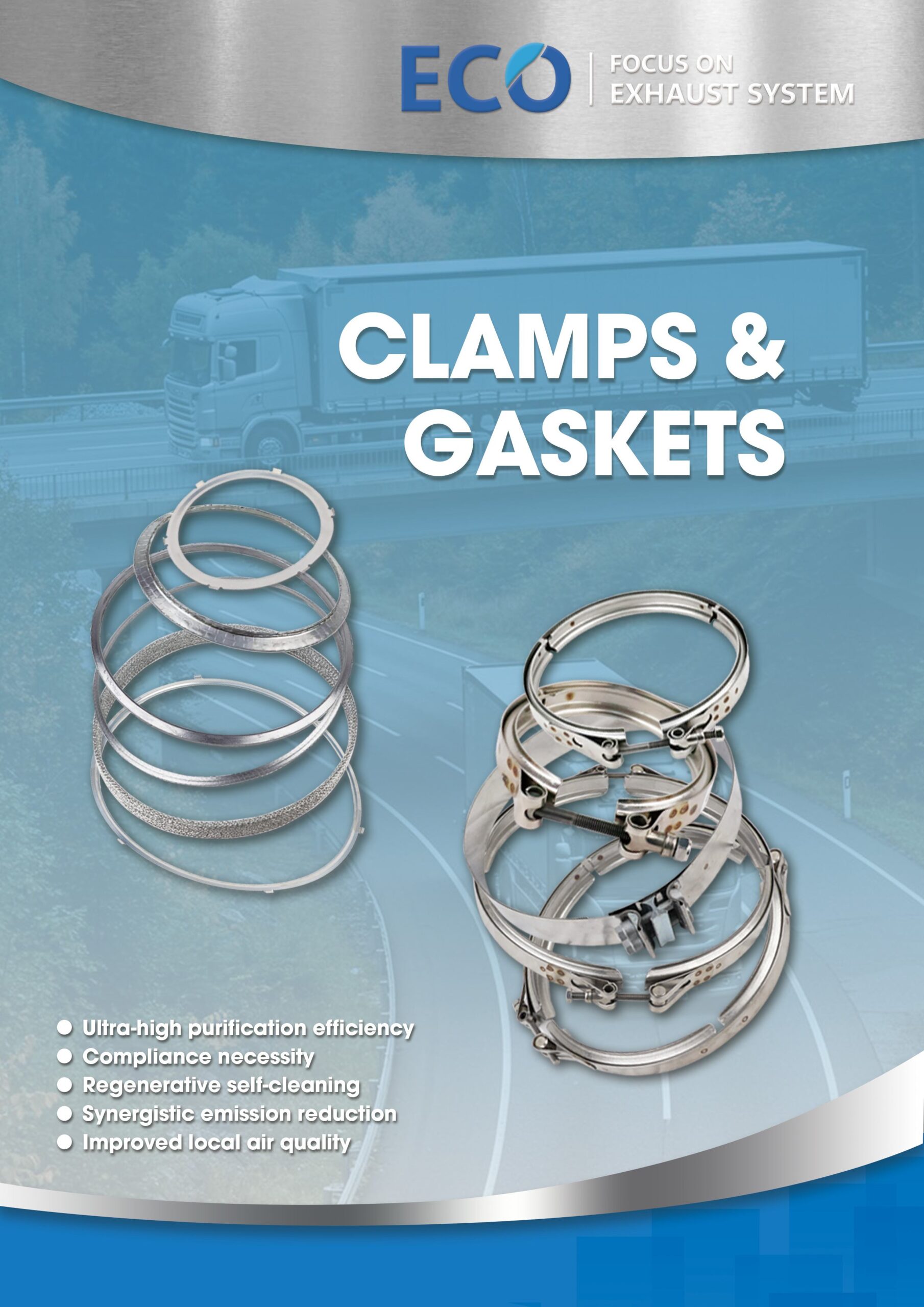
- Validate the complete service package. Treat clamps and gaskets as controlled sealing components. Confirm their material, profile, diameter and quantity instead of automatically reusing parts removed from a heat-cycled joint.
- Document the decision. Keep the matched identifiers and measurements on the quotation or work order. That record improves traceability and makes a later technical review far faster.
This workflow is intentionally conservative. It reduces the three most common sources of avoidable returns: mixed-market catalog data, superseded numbers without context and assemblies that share a filter body but not the same ports or connections. When information conflicts, stop and request the VIN/serial number, engine data plate and photographs. A short verification pause costs less than shipping a bulky DPF twice.
Installation and quality-control checkpoints
Before assembly, inspect the mating flanges under good light. Remove loose residue without cutting or reshaping the sealing surfaces. Dry-fit the parts to confirm that the joint closes concentrically and that brackets are not forcing the filter sideways. Position the gasket correctly, seat the clamp evenly and follow the vehicle or component maker’s current torque procedure. Do not use clamp tension to pull a misaligned exhaust into place. After the first thermal cycle, inspect for soot tracks, unusual noise, contact with surrounding components and signs that the clamp has shifted.
For purchasing teams, quality control should begin before shipment. Request clear part markings, dimensional confirmation, packaging that protects ports and sealing faces, and a cross-reference record tied to the customer inquiry. For maintenance teams, keep removed parts available until the new assembly passes inspection. The old label, port arrangement and clamp footprint are valuable evidence if an application question appears.
Questions to send with an RFQ
- What is the complete OE number and are any prefixes or suffixes visible?
- Which vehicle, engine and model year is involved, and in which market does it operate?
- What are the canister and connection diameters, overall length and port locations?
- Are new clamps, gaskets, ropes or wire-mesh seals required as part of the job?
- Can the supplier confirm the match in writing and provide installation-relevant notes?
Frequently asked questions
- Vehicle model versus engine-family catalog emphasis
- Different emissions generations and production cut-in dates
- Connection diameter, band profile and gasket construction
- Sensor, temperature and pressure-port count and clocking
- Mounting brackets, inlet/outlet orientation and overall envelope
- New, remanufactured and superseded OE-number conventions
A cross-market quotation example
Suppose an inquiry says only ‘Volvo DPF.’ A European Volvo FH/FM application and a North American Volvo/Mack application may both use the Volvo name but belong to different platform, engine, control and packaging systems. The quote should remain conditional until the OE number, market, model year, engine, measurements and photographs identify the actual assembly. This is a stronger commercial answer than guessing from the logo.
How to build regional website categories
A useful product interface should first ask the buyer to choose Europe or North America, then choose DPF or clamp-and-gasket kit. Within each page, brand/engine and OE-reference search should be visible. That structure mirrors how parts specialists think, lowers ambiguity and gives search engines a clear hierarchy without creating dozens of thin pages.
Can a DPF with the same diameter be interchangeable?
No. Diameter is only one attribute; length, substrate specification, port layout, connection geometry, flow direction and bracket location may differ.
Is the engine make enough for a North American match?
No. Add the OE number, vehicle/model year and physical verification because one engine family can appear in multiple chassis and aftertreatment packages.
Should a buyer order clamps and gaskets separately?
They can be ordered separately when positively identified, but a verified kit reduces omissions and helps keep sealing components matched to the service event.
Sources and technical references
- US EPA: Diesel Particulate Filter General Information
- EUR-Lex: Euro VI heavy-duty vehicle emissions framework
- Donaldson: exhaust seal clamp reference
Technical disclaimer: Cross-references are identification aids, not a substitute for the latest OE service information. Brands and OE numbers are used only to identify compatibility. ECO is an independent supplier unless explicitly stated otherwise.