

MAN TGX and TGS names cover multiple generations, engines, emissions stages and aftertreatment layouts. A request that says only MAN TGX clamp is therefore incomplete. Reliable fitment starts with the vehicle identity and the precise connection being serviced. It then checks the OE reference against physical details on the truck. This guide gives distributors and workshops a repeatable workflow without pretending that one kit fits every TGX or TGS.
Define the exact vehicle and aftertreatment position
Record model family, production year, VIN information available to the workshop, engine designation and Euro emissions level. State whether the connection is at the DPF inlet, outlet, DOC, SCR or a removable module. Similar-looking clamps can be used at different positions with different diameters or gaskets.
A wide photograph of the canister and adjoining pipes helps orient the request. Add close-ups of the clamp, gasket area, labels, sensors and brackets.

Use OE numbers as the cross-reference backbone
Capture the complete number from the old clamp, gasket, housing or parts documentation. Preserve leading zeros and separators. Check whether the number refers to a single component, a kit or a larger exhaust assembly. Supersession data should be documented rather than inferred.
When an OE reference maps to several supplier products, compare application notes and dimensions. Ask why each candidate is included and what evidence separates them.
Verify the physical connection
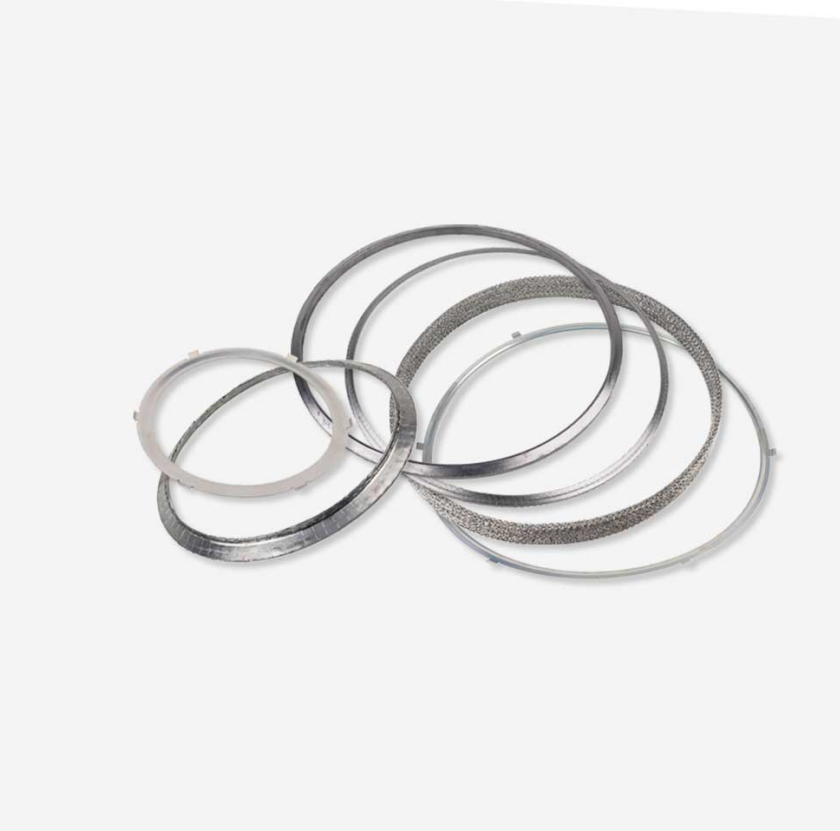
Measure the clamp seating diameter, band width, V profile, bolt style and available adjustment. For the gasket, record ID, OD, thickness and cross-section. Inspect the flange pair for steps, grooves or liners that affect kit contents.
Measurements taken from a distorted used clamp are approximate. Combine them with photos and catalog data, and state how the measurement was taken.
Account for previous repairs and mixed assemblies
A truck may have received a replacement DPF, repaired pipe or modified bracket. The current physical joint can therefore differ from the build data. If catalog and vehicle disagree, stop and resolve the discrepancy before ordering.
Do not force a catalog-matched clamp onto nonmatching flanges. Document any non-original housing numbers and request a dimensional review.
Create a distributor-ready fitment record
Save the confirmed vehicle data, OE references, supplier number, kit contents, images, dimensions and installation feedback in one record. Mark any limitations by production date or emissions level. This turns a one-time enquiry into reusable catalog knowledge.
For new references, validate a sample before committing to bulk inventory. Packaging labels should repeat the fitment identifiers used in the catalog.

Practical workshop and purchasing workflow
- Identify TGX or TGS generation, year, engine and Euro level.
- Name the exact aftertreatment connection.
- Collect complete OE and housing references.
- Photograph and measure clamp, gasket and flanges.
- Resolve any conflict caused by previous repairs.
- Validate a sample and record the confirmed application.
Use the workflow as a controlled information handoff. The workshop records the vehicle, joint and physical evidence; purchasing preserves the references and requested quantity; the supplier confirms the application and included components; and the installer reports the result. That closed loop is more reliable than a one-line request or an image without context.
For fleet and distributor programs, retain sample approvals, incoming inspection results, packaging observations and fitment feedback by supplier number. This record helps distinguish a true product issue from an application-data error, shipping damage or installation condition. It also creates better evidence for future sourcing decisions.
| Required data | Example format | Why it matters |
|---|---|---|
| Vehicle | MAN TGX, year, engine, Euro level | Narrows layout and generation |
| Position | DPF inlet or outlet connection | Separates similar clamps |
| References | Complete OE and supplier numbers | Supports auditable cross-reference |
| Geometry | Diameter, profile, gasket section | Confirms physical match |
| Evidence | Photos and sample result | Improves future catalog accuracy |
Quality-control questions before approval
Before approving any MAN TGX DPF clamp gasket kit, ask whether the reference is supported by a current application record, whether the measured geometry agrees with the part on the vehicle, and whether the sealing components are supplied as a compatible set. Confirm how the product is identified, protected in transit and linked to a production or inspection batch.
For a first order, use a sample or controlled quantity when practical. Inspect labeling, roundness, gasket condition, threads, welds and dimensions on arrival. Record the installation result instead of treating the absence of a complaint as validation. For repeat orders, monitor changes in appearance, packaging or supplier documentation and request an explanation before accepting an unannounced revision.
Installation feedback should be specific: vehicle details, OE number, connection position, photos before and after assembly, and the exact issue observed. Statements such as does not fit are difficult to investigate. Structured evidence allows the buyer and supplier to determine whether the problem concerns cross-reference data, manufacturing variation, an altered vehicle or workshop procedure.
What this means for distributors, fleets and workshops
For parts distributors
A distributor turning MAN TGX DPF clamp gasket kit into a repeatable product line needs more than a supplier price list. Build a master record that separates direct OE interchange, application reference and kit relationship. Attach dimensional drawings, actual product photos, carton labels and revision dates. Train sales staff to request vehicle and joint information before promising fitment. When a return occurs, quarantine the item and compare it with the approved sample rather than placing it directly back into stock. This process protects catalog credibility, reduces freight and creates evidence for a constructive supplier investigation.
For fleet maintenance teams
Fleet managers should connect parts decisions with vehicle history. Record the installed reference, mileage or operating hours, reason for removal, observed soot or damage, diagnostic information and the technician’s findings. If several vehicles show the same pattern, compare duty cycle, previous repairs and component batches before assuming one universal cause. Standardized records make it easier to decide whether to change a maintenance practice, review a supplier reference or investigate an engine and aftertreatment condition. They also help procurement measure the cost of downtime and repeat labor, not merely the purchase price.
For workshops and installers
Workshop quality begins before the old part is removed. Photograph the assembly, mark component orientation when useful, and protect sensors and lines. After removal, keep the clamp, gasket and identification labels together until the replacement is confirmed. Inspect the complete joint under good lighting and record measurements from clearly defined points. During reassembly, support the exhaust, keep sealing surfaces clean and follow the current application procedure. The final job record should state what was replaced, which specification source was used and how the repair was checked after installation.
For technical and purchasing communication
The most efficient enquiry is concise but complete. Put the target part and quantity in the subject line, then provide the truck make, model, production information, engine or emissions level, OE references, joint position, photographs and dimensions. State whether the request is for a sample, urgent repair or stocking program. This allows the supplier to respond with a specific product, kit contents, fitment questions, lead time and packaging plan. It also reduces the risk that assumptions become undocumented catalog claims.
Frequently asked questions
Does one clamp kit fit every MAN TGX?
No. TGX applications vary by generation, engine, emissions system and connection position.
Is the VIN enough to order?
VIN data is valuable, but confirm the actual installed assembly, especially after previous repairs.
Can TGS and TGX share parts?
Some references may overlap, but do not assume interchangeability without validated application data.
What if the OE number is unreadable?
Provide vehicle data, clear photos and careful dimensions for a manual fitment review.
Should a distributor stock before sample validation?
For a new or uncertain reference, sample validation reduces the risk of a larger incorrect inventory purchase.
Related ECO product and support pages
Conclusion
MAN TGX and TGS fitment becomes manageable when the request is structured. Vehicle identity, connection position, OE references and physical evidence create a defensible match and a better long-term catalog.
If you need a fitment check, send ECO the truck make, model, year, emissions level, OE number, clear product photographs, measured dimensions, required quantity and destination. Our DPF sourcing and technical services team can review the information before quotation.