
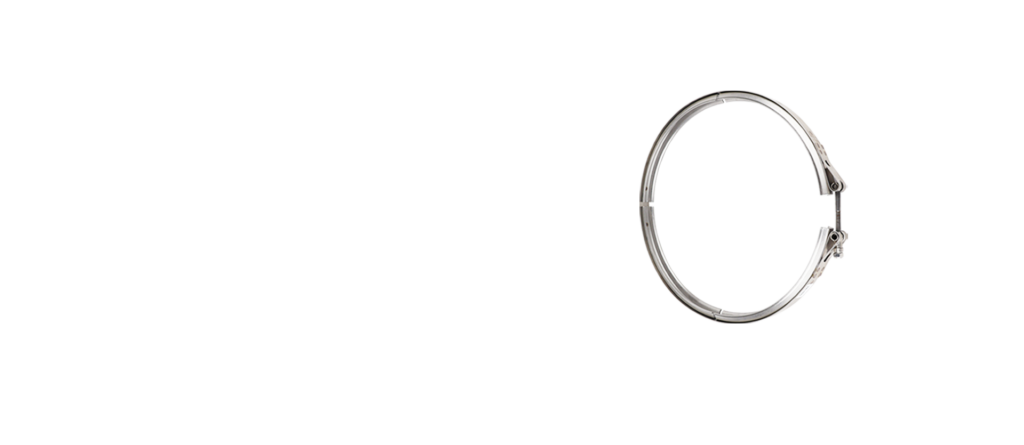
A heavy-duty DPF clamp does more than hold two exhaust parts together. It must distribute load around a hot, vibrating joint while allowing service access and preserving the position of the aftertreatment assembly. The correct choice depends on the connection design. V-band, flat-band and ID/OD clamps are not interchangeable categories, and even two V-band clamps with similar diameters can have different profiles, adjustment ranges and flange angles. This guide explains the main types and a practical way to select them without relying on appearance alone.
V-band clamps and how they load a flange
A V-band clamp surrounds a pair of shaped flanges. As the fastener is tightened, the internal V profile pulls those flanges together and creates circumferential clamping force. This compact design is common around DPF, DOC, SCR and turbocharger connections because it supports rapid assembly. Its effectiveness depends on geometric agreement among the band, flange angle, flange thickness and gasket.
A nominal diameter does not describe that geometry. Measure where the clamp seats, not an unrelated pipe section. Compare the V insert depth, included angle, band width, bridge shape and usable bolt travel. If the clamp bottoms out before the joint is seated, or if the V profile contacts only an edge, the resulting load will be uneven.
Flat-band, collar and ID/OD clamp applications
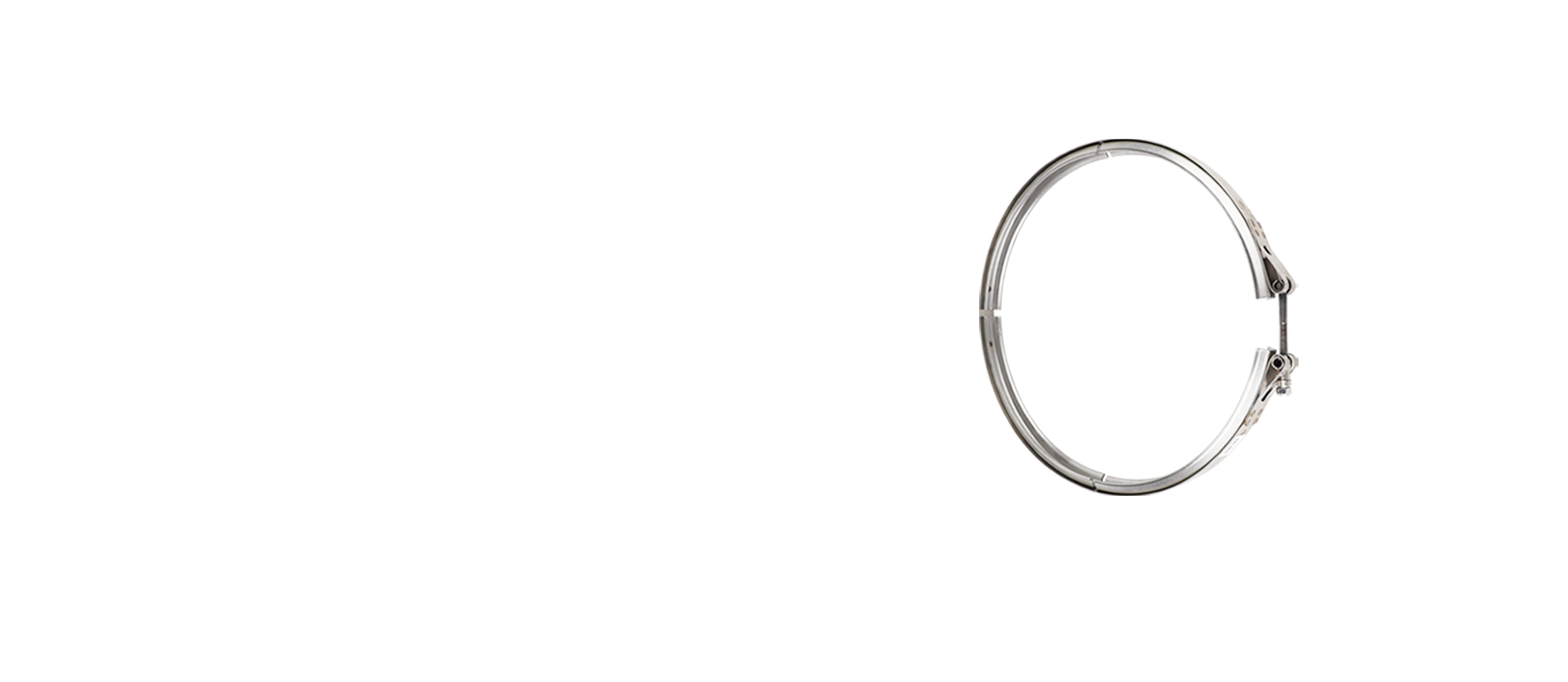
Flat-band clamps typically apply radial compression to cylindrical or overlapping connections. Some use a lap-joint arrangement, while others bridge a sleeve, collar or slotted pipe. ID/OD terminology often describes how one pipe fits inside another, but catalog usage varies, so a buyer should confirm the actual joint drawing or photograph. These clamps need the correct diameter range and enough band width to distribute force without distorting the pipe.
A flat-band clamp should not be substituted for a V-band design simply because it can wrap around the same diameter. It cannot reproduce the axial pull created by the V profile. Likewise, an oversized band that reaches its adjustment limit may feel tight at the bolt while applying inadequate pressure around the joint.
Dimensions that control fitment
Useful measurements include clamp inside diameter in the installed position, band width, V-profile dimensions, bolt diameter, bridge length and the distance available around the housing. Record whether the clamp is measured free or fitted, because springback changes the reading. For a gasketed connection, include gasket outer diameter, inner diameter and compressed cross-section.
Physical measurements should support, not replace, application data. Confirm the truck make, model, model year, engine family, emission stage and OE reference. If a housing or pipe has been replaced previously, photographs of the actual flanges become especially important. A supplier should reconcile any conflict between the catalog match and the part on the vehicle.
Heat, corrosion and manufacturing quality
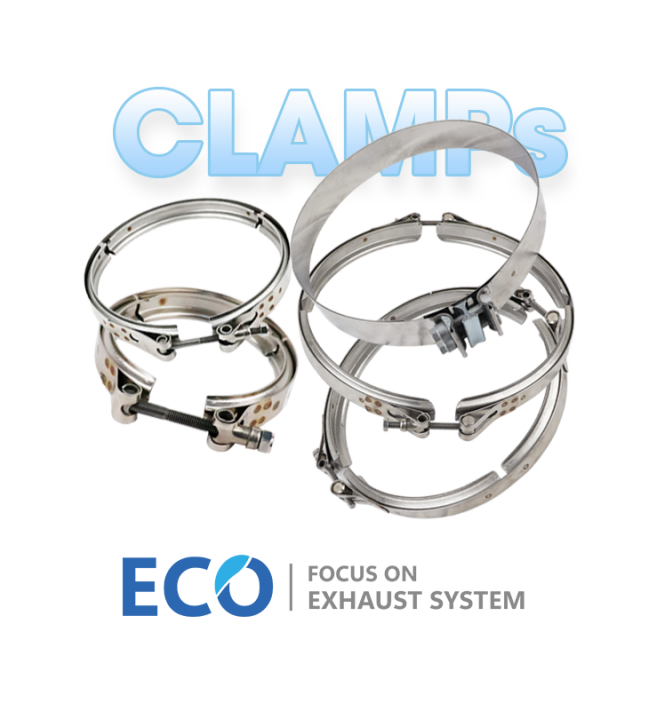
Aftertreatment clamps experience repeated heating and cooling, water and road salt exposure, vibration and service-tool loads. Material grade and thickness influence corrosion resistance and the ability to retain shape, but manufacturing details also matter. Look for smooth formed profiles, consistent welds, clean band edges, aligned bridges and undamaged threads. Surface discoloration alone does not prove failure, whereas cracking, severe pitting or permanent deformation is significant.
Fasteners should turn smoothly by hand before installation. Lubrication, if permitted, must follow the component or vehicle maker’s procedure because it changes the relationship between applied torque and bolt tension. Never assume that the same torque applies to every clamp that looks similar.
Selection and installation as one process
A correctly selected clamp can still leak if the flanges are misaligned, the gasket is displaced or the assembly is carrying pipe stress. Support the exhaust components, bring mating faces together without using the clamp as a pulling tool, and confirm the gasket remains centered. Tighten according to the validated procedure and inspect the full circumference as the joint seats.
After the initial heat cycle, follow the specified inspection process. Look for soot traces, movement, unusual noise or contact with nearby components. A workshop that records the part reference, measurements and installation result builds a useful fitment history for future repairs and purchasing.
Practical workshop and purchasing workflow
- Identify the connection type before selecting a clamp family.
- Confirm OE references and vehicle application data.
- Measure the seating diameter and clamp profile.
- Inspect flange and gasket condition before assembly.
- Align and support the exhaust; do not pull it together with the clamp.
- Use only validated installation and inspection instructions.
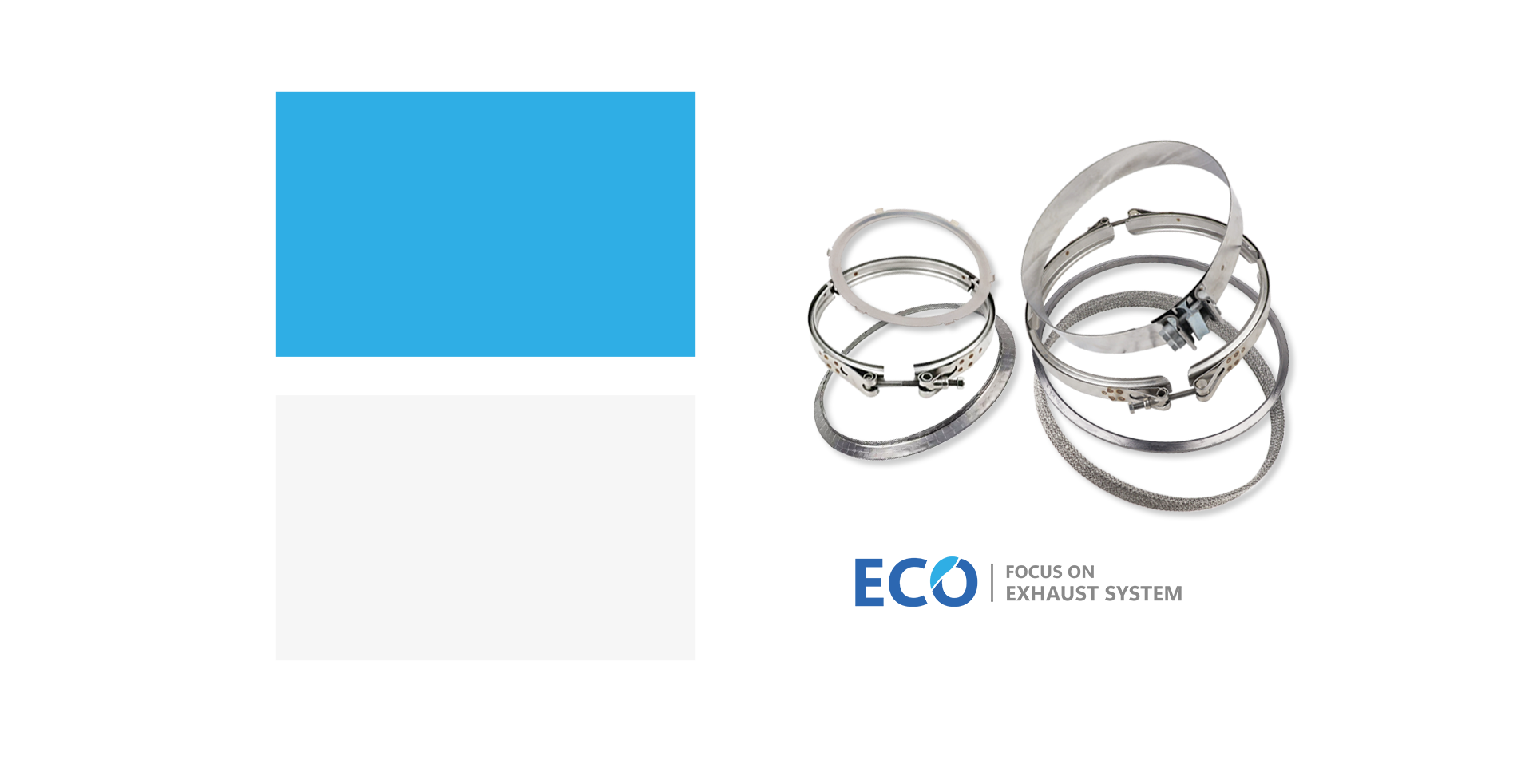
Use the workflow as a controlled information handoff. The workshop records the vehicle, joint and physical evidence; purchasing preserves the references and requested quantity; the supplier confirms the application and included components; and the installer reports the result. That closed loop is more reliable than a one-line request or an image without context.
For fleet and distributor programs, retain sample approvals, incoming inspection results, packaging observations and fitment feedback by supplier number. This record helps distinguish a true product issue from an application-data error, shipping damage or installation condition. It also creates better evidence for future sourcing decisions.
| Clamp type | Typical joint behavior | Key checks |
|---|---|---|
| V-band | Draws shaped flanges axially together | V angle, diameter, insert depth, gasket |
| Flat band | Compresses a cylindrical joint | Diameter range, width, overlap or sleeve |
| ID/OD or lap joint | Clamps nested pipe ends | Pipe orientation, slots, overlap length |
| Collar clamp | Retains or compresses a collar arrangement | Collar shape, width, clearance |
Quality-control questions before approval
Before approving any dpf clamp, ask whether the reference is supported by a current application record, whether the measured geometry agrees with the part on the vehicle, and whether the sealing components are supplied as a compatible set. Confirm how the product is identified, protected in transit and linked to a production or inspection batch.
For a first order, use a sample or controlled quantity when practical. Inspect labeling, roundness, gasket condition, threads, welds and dimensions on arrival. Record the installation result instead of treating the absence of a complaint as validation. For repeat orders, monitor changes in appearance, packaging or supplier documentation and request an explanation before accepting an unannounced revision.
Installation feedback should be specific: vehicle details, OE number, connection position, photos before and after assembly, and the exact issue observed. Statements such as does not fit are difficult to investigate. Structured evidence allows the buyer and supplier to determine whether the problem concerns cross-reference data, manufacturing variation, an altered vehicle or workshop procedure.
What this means for distributors, fleets and workshops
For parts distributors
A distributor turning dpf clamp into a repeatable product line needs more than a supplier price list. Build a master record that separates direct OE interchange, application reference and kit relationship. Attach dimensional drawings, actual product photos, carton labels and revision dates. Train sales staff to request vehicle and joint information before promising fitment. When a return occurs, quarantine the item and compare it with the approved sample rather than placing it directly back into stock. This process protects catalog credibility, reduces freight and creates evidence for a constructive supplier investigation.
For fleet maintenance teams
Fleet managers should connect parts decisions with vehicle history. Record the installed reference, mileage or operating hours, reason for removal, observed soot or damage, diagnostic information and the technician’s findings. If several vehicles show the same pattern, compare duty cycle, previous repairs and component batches before assuming one universal cause. Standardized records make it easier to decide whether to change a maintenance practice, review a supplier reference or investigate an engine and aftertreatment condition. They also help procurement measure the cost of downtime and repeat labor, not merely the purchase price.
For workshops and installers
Workshop quality begins before the old part is removed. Photograph the assembly, mark component orientation when useful, and protect sensors and lines. After removal, keep the clamp, gasket and identification labels together until the replacement is confirmed. Inspect the complete joint under good lighting and record measurements from clearly defined points. During reassembly, support the exhaust, keep sealing surfaces clean and follow the current application procedure. The final job record should state what was replaced, which specification source was used and how the repair was checked after installation.
For technical and purchasing communication
The most efficient enquiry is concise but complete. Put the target part and quantity in the subject line, then provide the truck make, model, production information, engine or emissions level, OE references, joint position, photographs and dimensions. State whether the request is for a sample, urgent repair or stocking program. This allows the supplier to respond with a specific product, kit contents, fitment questions, lead time and packaging plan. It also reduces the risk that assumptions become undocumented catalog claims.
Frequently asked questions
Are all DPF clamps stainless steel?
Many are stainless, but specifications vary. Confirm material, thickness and corrosion requirements for the application.
Can a V-band clamp be identified by diameter only?
No. The internal V profile, flange geometry and bolt range are equally important.
Why does a new clamp still leak?
Common causes include a mismatched gasket, damaged flange, misalignment, pipe stress or an incorrect tightening procedure.
Can I tighten a clamp until the leak stops?
No. Excess tightening can distort the clamp or flange. Diagnose fitment and sealing surfaces and follow validated instructions.
What should distributors record?
Keep OE cross-references, dimensions, photos, included components and known vehicle applications with each supplier number.
Related ECO product and support pages
Conclusion
Choosing a DPF clamp is a geometry and application task, not a visual matching exercise. When catalog data, measurements, material quality and installation practice all agree, the joint has a far better chance of remaining secure through heat cycles and heavy-duty service.
If you need a fitment check, send ECO the truck make, model, year, emissions level, OE number, clear product photographs, measured dimensions, required quantity and destination. Our DPF sourcing and technical services team can review the information before quotation.