
A V-band clamp that does not match the DPF flange diameter will leak, distort or fail to torque correctly. Measuring the diameter, band width and joint geometry is the single most important step before ordering a replacement clamp. This guide shows how to take accurate measurements in the workshop and which numbers to send to your supplier.
Table of Contents
Why Accurate Clamp Measurement Matters
V-band clamps are designed to grip a specific flange diameter. A clamp that is too large will not generate enough radial load, causing a leak even at correct torque. A clamp that is too small cannot close fully, stretches the band, and may crack the bolt housing or distort the flange. In both cases the result is an exhaust leak that can mimic a DPF or sensor fault.
For a deeper understanding of the failure modes, read our guide on DPF V-band clamp inspection: distortion, corrosion and uneven load. Measurement is the first line of defence against these problems. Our own process at ECO includes physical dimension and joint-geometry checks before recommending any heavy-duty exhaust solution.
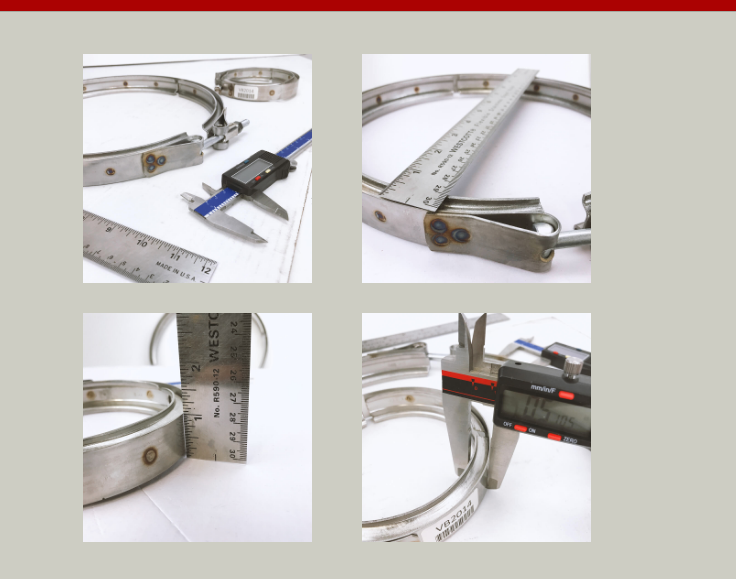
Tools You Will Need
Before starting, gather the following:
- Vernier caliper or dial caliper: For measuring flange diameter and band width to within 0.1 mm.
- Tape measure or flexible circumference gauge: For large diameters where a caliper cannot reach around the flange.
- Torque wrench: To confirm the clamp is being torqued to the correct specification during reinstallation.
- Straight edge and feeler gauge: To check flange warping and gasket surface flatness.
- Camera: To photograph the assembly, identification labels and measurement points.
How to Measure DPF Clamp Diameter
Follow these steps in order to get a reliable diameter reading:
- Allow the exhaust to cool completely. Working on a hot system is both unsafe and inaccurate because metal expands.
- Release the V-band clamp bolt and remove the band from the flange. Do not pry the flange apart.
- Clean the flange sealing surface. Soot, carbon and rust add false thickness to the measurement.
- Measure the outside diameter of the flange at three points around the circumference. Record each reading and note any ovality. A distorted flange reads differently at different angles.
- If the flange is large, measure the circumference with a flexible tape and divide by 3.14159 to derive the diameter. Record both the circumference and calculated diameter.
- Compare the reading to the clamp’s nominal size. Heavy-duty V-band clamps are available in standard and oversize (fleet) variants.
If the flange is visibly warped or oval, do not simply order an oversize clamp to compensate. A warped flange requires resurfacing or replacement. Our article on why DPF gaskets leak after service explains how surface and alignment problems defeat even the best clamp.
Measuring Band Width and Flange Profile
Diameter alone is not enough. The band must match the flange profile angle. Measure:
- Band width: The width of the clamp band, typically 12–19 mm on heavy-duty applications.
- Flange angle: The V-profile angle on the flange. A 15° and a 30° flange look similar but use different clamps.
- Bolt housing type: Quick-release, nut-and-bolt, or T-bolt. Each has different torque requirements.
- Groove depth: Some flanges use a grooved seat; others use a flat face. The gasket must match.
These details determine whether the clamp will seat correctly. Our guide on DPF clamp torque and correct installation covers the bolt housing and torque side in detail.

Common V-Band Sizes Quick Reference
| Nominal Size | Typical Diameter (mm) | Common Application |
|---|---|---|
| 4 inch | ~101.6 | Smaller aftertreatment joints |
| 5 inch | ~127 | Mid-size DPF inlet/outlet |
| 6 inch | ~152.4 | Heavy-duty DPF common size |
| 7 inch | ~177.8 | Larger canister joints |
| 8 inch | ~203.2 | Large commercial aftertreatment |
These are nominal references only. Always measure the actual flange; production tolerances and aftermarket variants differ. Use the OE cross-reference process in our guide to cross-referencing a truck DPF by OE number to confirm the exact kit.
What to Send Your Supplier
To get the correct DPF clamp and gasket on the first order, send your supplier:
- Measured outside diameter (and circumference if used).
- Band width and flange profile angle.
- OE DPF reference number and vehicle make/model/year.
- Clear photographs of the clamp, flange and identification label.
- Bolt housing type and required quantity.
ECO reviews this information before quotation. Our contact page lists the required details for a fast fitment check. For distributors, our European clamp and gasket kits page groups the most common sizes by market.
Frequently Asked Questions
Can I reuse a V-band clamp if it measures the same?
No. V-band clamps are torqued to a specific stretch. After repeated thermal cycles the band loses spring tension. Always replace the clamp when the DPF is serviced, even if the measurement looks correct.
What if my measurement is between two standard sizes?
Do not force a clamp that is too small or too large. Check whether the flange is warped, and send the measurement to your supplier for an oversize or fleet variant recommendation.
Do I need to measure the gasket too?
Yes. The gasket must match the flange groove or face profile, not just the diameter. Measure the gasket’s inner and outer diameter and its thickness. See our guide on choosing the correct DPF gasket.
How tight should I torque a new V-band clamp?
Follow the vehicle or clamp manufacturer’s specification. Torque is not a substitute for correct diameter and profile. See our DPF clamp torque guide for details.
Common Measurement Mistakes
Even experienced technicians make measurement errors that lead to wrong clamp orders. The most frequent mistake is measuring only one point around the flange. Heavy-duty flanges are often slightly oval after years of thermal cycling. A single measurement can hide this and lead to ordering a clamp that grips unevenly. Always measure at three points and record the spread. If the ovality exceeds about one millimetre, the flange may need resurfacing before any new clamp is installed.
Another common error is measuring the inside diameter of the flange rather than the outside. V-band clamps grip the outside V-profile, not the inside bore. Measuring the wrong surface by just a few millimetres results in a clamp that is either too tight or too loose. When in doubt, measure both and send both readings to your supplier. Our guide on V-band clamp inspection shows how distortion and uneven load appear on real joints.
Documenting Measurements for Repeat Orders
For fleets that service the same vehicle models repeatedly, record the measured dimensions alongside the OE number. This creates a fitment record that saves time on the next order. Store the vehicle make, model, engine, OE DPF number, flange diameter, band width and gasket part number in a simple spreadsheet. When a new DPF needs replacement, you already know which clamp and gasket kit to send. This is the same principle behind the DPF cross-reference database approach, applied at the fleet level.
Conclusion
Measuring the DPF clamp diameter is a simple step that prevents a large share of fitment failures. Take the time to measure the flange, band width and profile angle, photograph the assembly, and send complete data to your supplier. A measured, matched clamp and gasket set installs correctly on the first attempt and avoids the repeat labor that comes from a wrong part.