
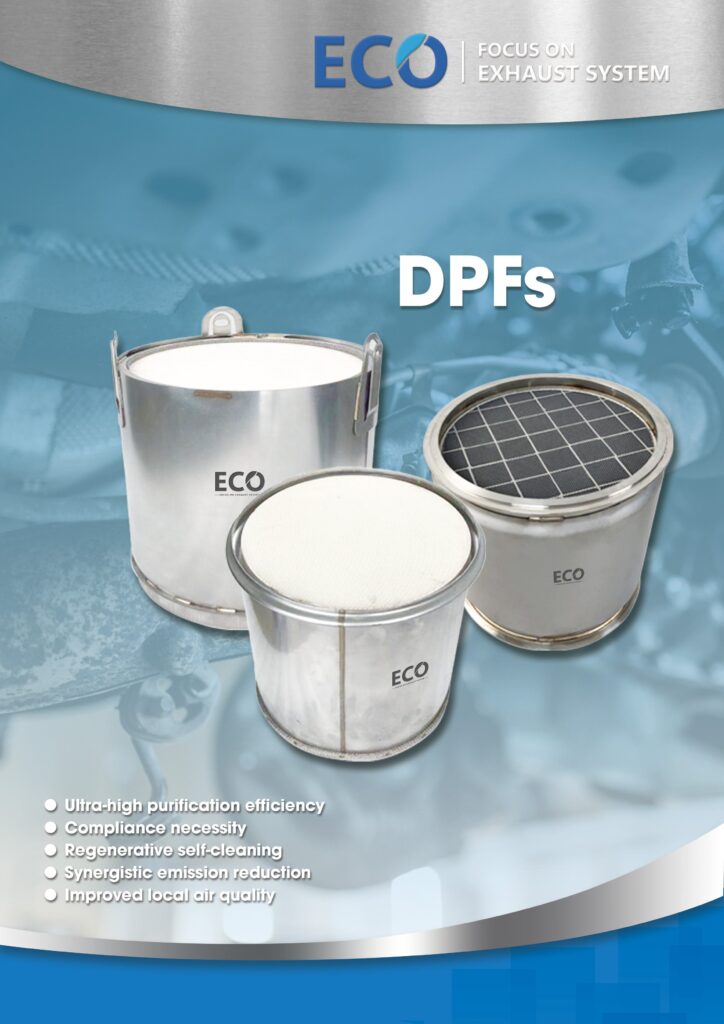
Euro 6 and Euro 5 are two of the most important emissions standards for European heavy-duty trucks, and they drive different DPF, clamp and gasket requirements. Parts buyers who confuse the two can order the wrong filter, face fitment failures, and risk non-compliance. This guide explains the key differences and how they affect replacement part selection.
Table of Contents
- What Are Euro 5 and Euro 6?
- Key Differences Between Euro 5 and Euro 6 DPF Systems
- How It Affects Clamps, Gaskets and Sealing
- Euro 5 vs Euro 6 Quick Comparison Table
- How to Verify a Truck’s Emissions Level
- Regeneration Strategy Differences
- Sourcing Replacement Parts for Either Standard
- Frequently Asked Questions
What Are Euro 5 and Euro 6?
Euro 5 (Euro V) regulated heavy-duty diesel emissions starting in 2009, tightening limits on particulate matter and nitrogen oxides. Euro 6 (Euro VI), introduced from 2014–2016 depending on the market, imposed much stricter NOx limits and required nearly all heavy-duty trucks to combine a DPF with selective catalytic reduction (SCR) using diesel exhaust fluid (AdBlue/DEF).
The practical result is that Euro 6 trucks carry more complex aftertreatment systems: DPF plus SCR, often in a single canister or close-coupled arrangement, with more sensors, temperature probes, and pressure monitoring points. Euro 5 trucks may have a simpler DPF-only or DPF-plus-oxidation-catalyst layout. For a broader overview, see our European DPF selection guide covering DAF, Iveco, MAN, Mercedes, Scania and Volvo.
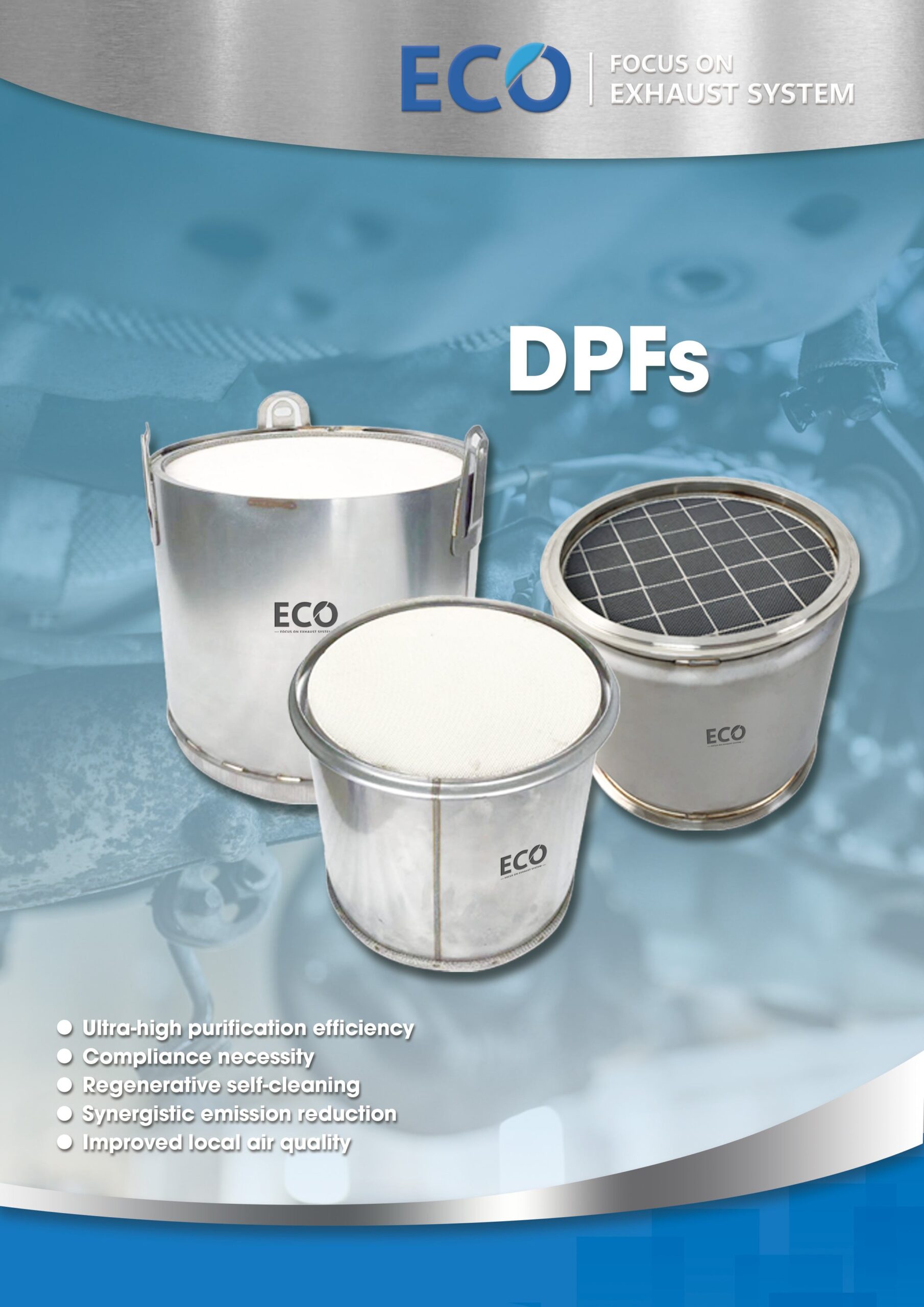
Key Differences Between Euro 5 and Euro 6 DPF Systems
The emissions standard affects the entire aftertreatment architecture, not just the filter element. Several differences matter for parts buyers:
- NOx reduction: Euro 6 requires SCR with AdBlue dosing. Euro 5 relied more on EGR and a simpler DPF.
- Sensor count: Euro 6 systems include more NOx sensors, temperature sensors, and differential pressure sensors. Sensor port locations and brackets differ between standards.
- Canister geometry: Euro 6 DPFs are often packaged tighter, combining DPF and SCR in one housing. Flange sizes, clamp diameters, and gasket shapes differ.
- Regeneration strategy: Euro 6 uses more frequent active regeneration and tighter soot-load modeling. Sealing leaks are detected more aggressively.
- Thermal management: Euro 6 runs hotter during active regeneration, placing greater stress on clamps and gaskets over repeated cycles.
These differences mean a Euro 5 DPF and a Euro 6 DPF for the same truck model are usually not interchangeable, even if the outer canister looks similar. The OE reference number, sensor port layout, and emissions label must match.
How It Affects Clamps, Gaskets and Sealing
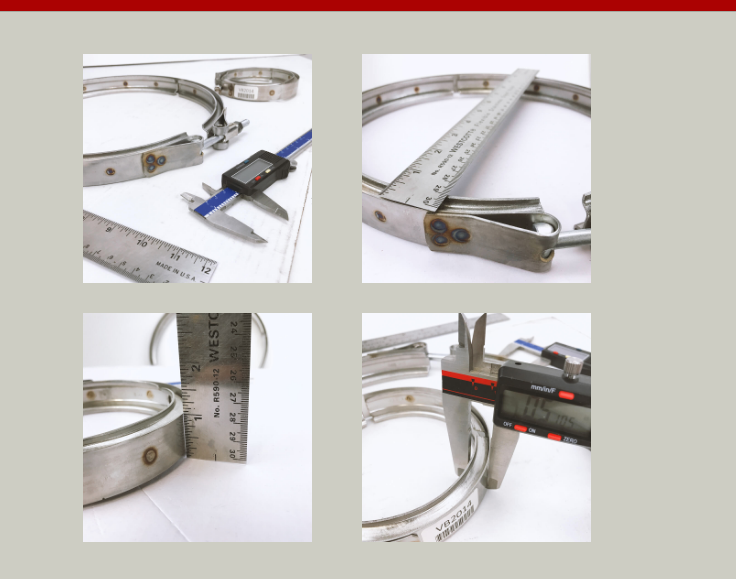
Because Euro 6 systems run hotter and monitor pressure more precisely, the V-band clamps and flange gaskets face higher thermal and mechanical demands. A clamp that holds up on a Euro 5 application may distort prematurely on a Euro 6 unit. Band width, bolt material, and gasket composition are often upgraded for Euro 6.
When replacing a Euro 6 DPF, always specify the clamp and gasket kit for that emissions standard, not just the truck model. Our guide on heavy-duty DPF clamp types and fitment selection explains how band width and diameter affect retention. For flange-to-canister joints, the correct DPF gasket must match the multi-layer steel or graphite composition specified for Euro 6 temperatures.
Euro 5 vs Euro 6 Quick Comparison Table
| Feature | Euro 5 (Euro V) | Euro 6 (Euro VI) |
|---|---|---|
| Main NOx control | EGR, limited SCR | SCR with AdBlue/DEF |
| DPF configuration | Standalone or DOC + DPF | DPF + SCR often combined |
| Sensor ports | Fewer temp/pressure sensors | More NOx, temp and pressure sensors |
| Regeneration temperature | Moderate | Higher, more frequent |
| Clamp demands | Standard V-band | Upgraded band width and material |
| Gasket type | Standard multi-layer steel | High-temp multi-layer / graphite |
| Typical years | 2009–2014 | 2014+ (varies by brand) |
How to Verify a Truck’s Emissions Level
The only reliable way to determine whether a truck is Euro 5 or Euro 6 is to check the vehicle’s emissions certification plate, usually located on the door pillar, firewall, or engine bay. It lists the emissions standard, type approval number, and OE DPF reference. You can also decode the VIN or ask the dealer for the exact aftertreatment part number.
Do not rely on model year alone. Some manufacturers sold Euro 5 and Euro 6 variants of the same model in the same year. Our MAN DPF OE number cross-reference guide demonstrates how closely model-year and emissions variants track different OE references. When in doubt, send ECO the OE number and a clear photograph of the emissions label for confirmation.
Regeneration Strategy Differences
Beyond the hardware, Euro 6 and Euro 5 trucks behave differently on the road. Euro 6 units initiate active regeneration more frequently because the ECU models soot load more tightly. This means workshop teams dealing with Euro 6 trucks need to monitor regeneration cycles closely and ensure the vehicle is not interrupted mid-cycle. Euro 5 trucks, with their wider margins, may tolerate more short-stop duty cycles before a warning appears. For fleets running mixed Euro 5 and Euro 6 vehicles, training technicians on both regeneration behaviors prevents misdiagnosis.
The cost of ownership also differs. Euro 6 trucks require DEF, more sensor replacements, and more frequent sealing component attention. When budgeting replacement parts, fleet managers should factor in the higher maintenance intensity of Euro 6. Our fleet buyer’s checklist helps standardize these calculations across mixed fleets. If regeneration issues arise, our guide on DPF regeneration failure causes covers diagnosis for both standards.
Sourcing Replacement Parts for Either Standard
ECO supplies OE-fit replacement DPFs, clamps and gaskets for both Euro 5 and Euro 6 applications across Mercedes, MAN, Volvo, DAF, Scania and Iveco. Each kit is matched by OE reference, clamp diameter, gasket geometry and emissions configuration. Our European DPF product line lists the covered applications, while our parts crosses page supports OE-number lookup.
When ordering, provide: truck make, model and year; engine type; emissions standard; OE DPF part number; and measured clamp diameter. This information prevents ordering a Euro 5 kit for a Euro 6 truck or vice versa. For fleet buyers, our fleet buyer’s checklist standardizes the approval and incoming-inspection process.
Frequently Asked Questions
Can a Euro 5 DPF fit a Euro 6 truck?
Usually no. Even where the outer canister looks similar, sensor ports, SCR integration, flange geometry and regeneration strategy differ. Always match the OE reference and emissions label, not the model year.
Are Euro 6 DPF clamps different from Euro 5 clamps?
Often yes. Euro 6 systems run hotter and use upgraded V-band clamps with wider bands and higher-temperature materials. Using a Euro 5 clamp on a Euro 6 joint risks premature loosening and exhaust leaks.
How do I know if my truck uses AdBlue?
If the truck has an AdBlue/DEF filler and a dashboard warning level gauge, it is a Euro 6 (or equivalent) SCR-equipped vehicle. Euro 5 trucks generally do not require AdBlue.
Does ECO supply both Euro 5 and Euro 6 parts?
Yes. ECO supplies OE-fit DPF, clamp and gasket kits for both Euro 5 and Euro 6 heavy-duty applications. Provide the OE number and emissions label for accurate matching. Contact us via the contact page.
Conclusion
Euro 5 and Euro 6 represent different aftertreatment architectures, and confusing them is a common and costly sourcing error. The DPF, clamp, gasket, sensor layout and regeneration behavior all differ. Verify the emissions label, match the OE reference, and order a complete kit—DPF, clamp and gasket together—to avoid repeat service. ECO’s technical team can review your application data before quotation.